

Confusing Learning with Studying
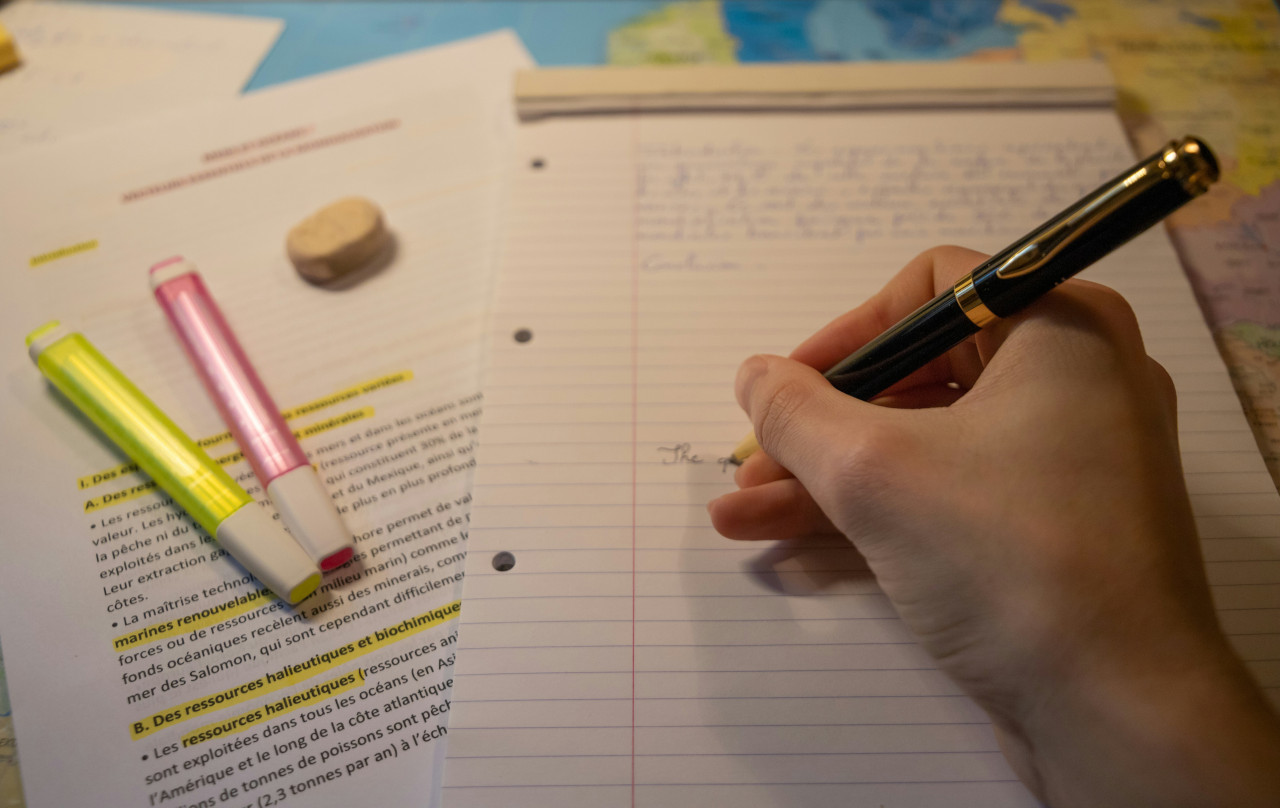

A second-language English student once told me, with a good deal of joy, "Today I learnt that we cannot say 'to' after 'can'!" It was interesting that this student was able to repeat the rule from memory, yet was unable to put that rule into practice. Interesting, too, that she used the word "learnt," as one of the most common mistakes I see in students is the inability to see the difference between learning something and studying it.
To me, studying is things like sitting in class, taking notes, buying books, doing exercises, etc. None of those things in and of themselves will lead to learning - by which I mean being able to apply in the relevant situation (an exam, a conversation) something that has been taught to us.
A school I worked in once had a long-term Japanese student who spent hours and hours working on his English. He was always the first to arrive at school, and always the last to leave. He never interacted with the other students or joined any evening social activities; in his host family he would lock himself in his room and devote himself to his studies. At the end of his time at the school, his English was barely any better than when he arrived - round about A2 level. I'd suggest that this was because all the work he did consisted in studying - that is, reading rules, doing exercices - never learning. There was never a moment where he tried to memorise what he had studied, and put those things into practice in a conversation, which would have tested how successful he had been at digesting the things he'd studied.
One of the key mistakes here is in the way students use their notes. It's easy to assume that just because we write things down, we'll retain them. It's worth remembering that we write in order to forget; think about it: we write shopping lists so that we don't have to remember what we need all the way to the shop; we can forget it and focus on the driving, because we have our list. We can then take that list out and refer to it once we get to the supermarket. But can't take our notebooks out and consult them in the middle of a conversation or an exam. Instead, we have to learn what's in them, and make a special effort to use what we have written in them.
Now, this is not to say that students should not write things down. Of course they should! In the heat of the moment during a lesson, our notes are the best things we have to remind us of what the teacher taught us. But the notes themselves shouldn't be confused with learning: what we have been taught is still in our books, not in our heads. And we need to get the teaching into our heads as soon as possible. That means re-reading our notes, memorising them, and testing whether or not we can reproduce the material contained in them - without prompts - in a conversation (if, say, we're trying to learn a foreign language) or in written form (if we're practising for an exam).
You've read and understood that chapter on the House of Lords for your A-Level Politics exam, but how much can you actually reproduce? Take the blank-paper test: write down as much as you can remember. Then go back to the chapter to see if you've missed anything important. Then do the blank-paper test again ... and again. Each day until it goes in. Do it on the bus in the morning, and speak about what you learnt with anyone who'll listen!
Notice how different this blank-paper test is to slavishly trawling through exercises in a grammar book - something that many language students do. The problem with exercises is that the book gives you 80 or 90% of the sentence already - you just have to fill the gaps. They even tell you what to fill the gaps with! Instead, make your own sentences. If one of the uses of, say, the Present Perfect Continuous tense is to talk about temporary habits which have only recently started, then think of some examples of that from your own life: "I've been eating more chocolate than usual recently. I need to get it under control."
So what can you expect if you switch your focus from studying to learning in the manner that I've suggested here? Well, using the blank-paper test and staying away from grammar books, I achieved an advanced grade in Spanish a year after starting from zero.
Why not try these methods yourself? I promise you'll see the difference!