

Why Exam Anxiety is the Real Problem - and What We Can Do About It
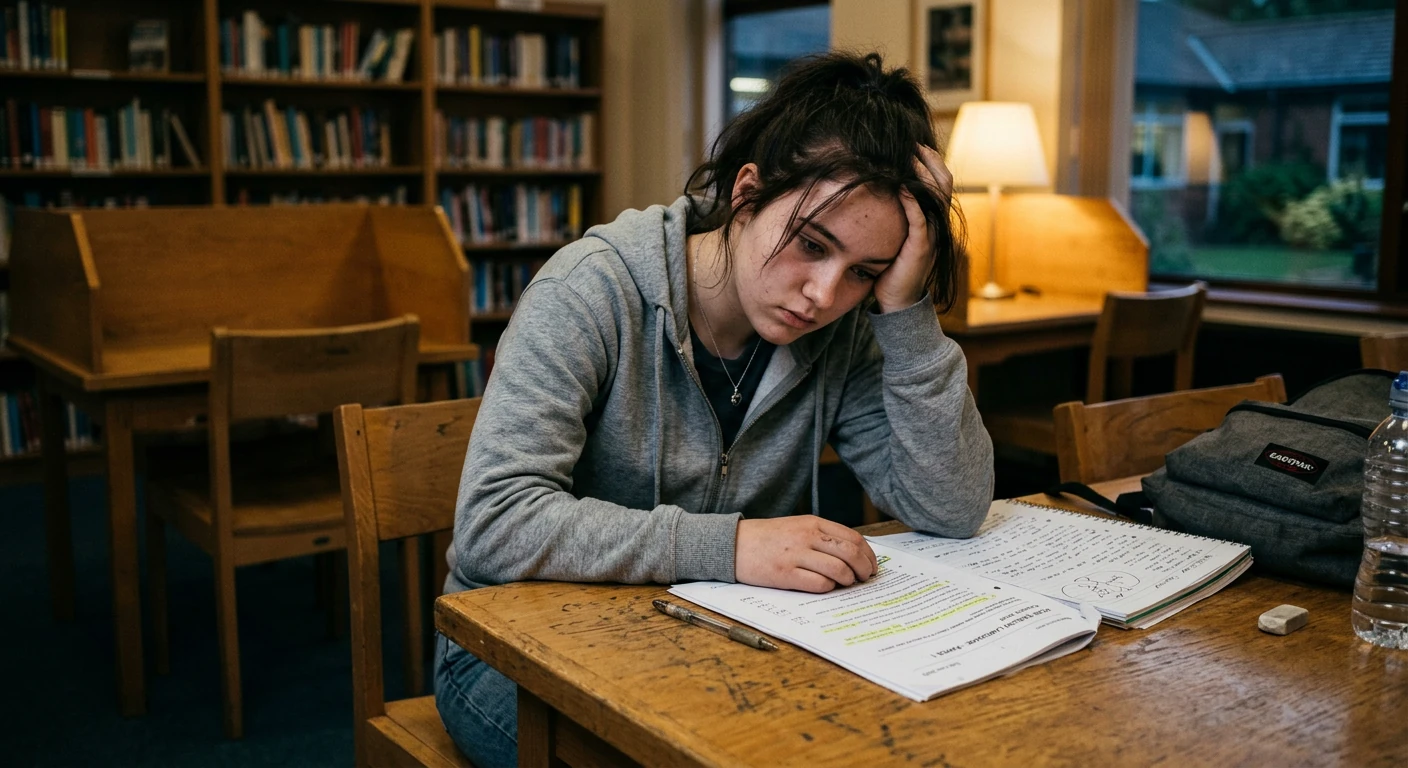
More than half of students who sat GCSEs in the summer of 2024 said they found the exam period difficult or very difficult to cope with. That figure comes not from a campaigning charity or a worried parents' forum, but from the government's own evidence base for the biggest review of English education in a generation. When the people designing the exam system start citing student distress as a reason to redesign it, it stops being a wellbeing footnote and becomes the headline.
What the curriculum review actually found
Professor Becky Francis's Curriculum and Assessment Review, commissioned by the government and published in full in November 2025, drew on more than 7,000 submissions from students, parents, teachers and employers. A recurring theme ran through nearly all of them: there are too many exams, packed into too short a window, and too much weight is placed on how a student performs across a handful of high-stakes weeks. Three in four teachers surveyed said the current GCSE assessment model has made student mental health worse, not better, compared with the system it replaced a decade ago. The review's own language was blunt: England is an outlier among comparable countries for having such a stressful, elongated exam period.
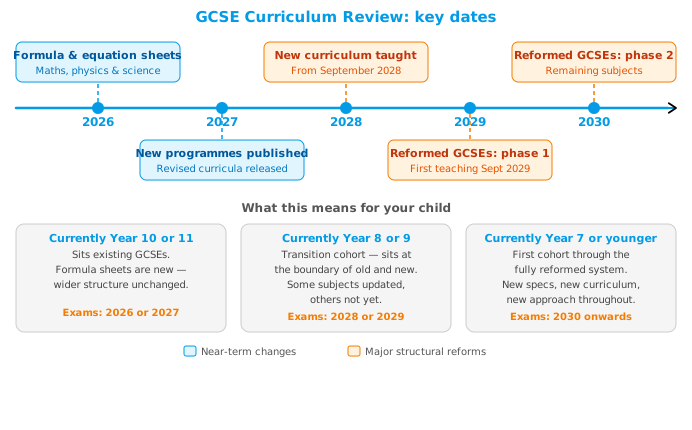
The response has been a set of changes that, on paper, look meaningful. GCSE exam time will be cut, with the review itself calling for at least a 10 per cent reduction, worth around three hours per student, and the government settling on a slightly more modest cut of two and a half to three hours. A new national curriculum will be published in spring 2027. None of it takes effect for current students. First teaching under the new curriculum doesn't begin until September 2028, which means anyone starting Year 10 this September will sit the very exams the review criticised, under very nearly the same conditions.
Why the timeline matters more than the reform
This is the part of the story that tends to get lost. A review can identify the right problem and still leave families to deal with it largely unaided for years. A student in Year 11 next summer, or the one after that, will not benefit from a shorter exam timetable, a broader mix of assessment types, or any of the structural changes now working their way through consultation. They will sit exactly the exams their older siblings sat: the same volume, the same terminal assessment model, the same six-week stretch in May and June that the review itself singled out as unusually punishing.
So while the political and curricular debate plays out over the next two years, the practical question for parents doesn't change: what actually helps a fifteen or sixteen year old cope with an exam system that, by the government's own admission, is currently getting the balance wrong? The answer isn't waiting for 2028. It's in how a student prepares for the exams they're already going to sit.
Anxiety is a signal, not a personality trait
One of the more useful shifts in how schools and psychologists now talk about exam stress is treating it as information rather than a flaw in the student. A 2022 study published in Support for Learning found that students who understood their own anxiety, rather than simply being told to relax, showed measurably better coping and wellbeing during the exam period itself. Anxiety, in other words, is usually telling a student something true: that they feel underprepared, that the stakes feel disproportionate to their sense of control, or that they don't yet know how the exam actually works as opposed to how the syllabus reads.
That reframing matters because it points to what actually reduces anxiety, and it isn't reassurance alone. It's competence. A student who has sat a genuine timed paper under exam conditions, who knows what an eight-mark question is actually asking for, and who has had specific, corrected feedback on their own weaknesses rather than generic revision advice, walks into the exam hall with a different relationship to the pressure. The nerves don't disappear. But they stop being accompanied by the far more corrosive feeling of not knowing what's coming.
The counterargument worth taking seriously
It would be fair to push back here and say that tutoring itself can add to the pressure this article is describing. A student already anxious about exams doesn't obviously benefit from an extra hour a week that feels like more assessment, more correction, more evidence of what they don't know. Poorly delivered tutoring, the kind built entirely around past papers and mark schemes with no attention to how a particular student actually thinks, can absolutely make anxiety worse rather than better. That criticism lands, and any tutor who ignores it isn't doing the job properly.
But the answer to that risk isn't less support, it's better support. In our experience matching students with tutors over the past twenty years, the sessions that reduce anxiety most effectively are rarely the ones focused purely on content. They're the ones where a tutor takes the time to understand why a particular topic or question type causes a specific student to freeze, and works on that directly, whether it's exam technique, timing, or simply the unfamiliarity of an unseen text. A good one-to-one tutor can slow down and diagnose in a way a class of thirty simply cannot, and that diagnostic attention is often what turns vague dread into a manageable, specific problem.
What actually helps between now and 2028
For a parent watching a Year 10 or Year 11 student start to worry, there are things that make a genuine difference well before any curriculum reform arrives. Timed practice under real exam conditions, not just reading through notes, closes the gap between what a student thinks they know and what they can actually produce under pressure. Early, specific feedback on weak areas, rather than a general instruction to "revise harder," gives anxiety somewhere useful to go. And spacing preparation out over months rather than compressing it into a final panicked fortnight avoids the exact pattern the curriculum review's own respondents flagged as most damaging: a short, intense burst of high-stakes assessment with no room to recover between papers.
None of this requires waiting for a new curriculum, a government response, or a 2028 start date. It requires treating exam anxiety the way the review's own evidence suggests it should be treated: not as an unfortunate side effect to be managed after the fact, but as a direct, fixable consequence of how prepared a student actually feels. The system may be slow to change. The way a family and a good tutor respond to it doesn't have to be.